Why Am I So Tired During Perimenopause?
by Megan Fain, PT
Founder, Power Reset Path
Last reviewed August 2026

You slept.
Technically.
You went to bed.
You closed your eyes.
Hours passed.
So why do you wake up feeling like your battery charged to approximately 37%?
Or maybe sleep isn’t even the problem.
You’re getting through the day, doing what you’ve always done, but everything seems to require a little more effort than it used to.
By afternoon, you’re done.
And you keep wondering:
Why am I so tired?
Fatigue can show up during the menopause transition.
But before we blame hormones for everything, let’s look at what might actually be going on.
First: Tired Isn’t Always the Same as Sleepy
We use the word “tired” to describe a lot of different things.
Sometimes you need sleep.
Sometimes you feel physically exhausted.
Sometimes your brain feels foggy.
Sometimes you have no motivation.
Sometimes your body feels heavy.
And sometimes you’re simply running out of capacity before the day runs out of demands.
Those experiences can overlap.
But they don’t necessarily have the same cause.
That’s why instead of immediately asking:
“How do I get more energy?”
I want you to start with:
“What does tired actually feel like for me?”
That’s information.
And information gives us somewhere to begin.
1. Your Sleep May Not Be as Restorative as You Think
You can spend eight hours in bed without getting eight hours of quality sleep.
During perimenopause, women may experience:
Trouble falling asleep
Waking frequently
Waking earlier than intended
Night sweats
Difficulty falling back asleep
You may not even remember every awakening.
But fragmented or insufficient sleep can show up the next day as fatigue, irritability, difficulty concentrating or forgetfulness.
So if you’re exhausted, don’t just ask:
“How many hours was I in bed?”
Also ask:
“How am I actually sleeping?”
2. Night Sweats Can Be Stealing Sleep
Hot flashes don’t politely wait until daytime.
When they happen at night, we call them night sweats.
And they can interfere with sleep.
Maybe you wake up hot.
Throw off the covers.
Get cold.
Pull them back up.
Wake again.
Repeat.
Even if you’re technically “sleeping through the night” some nights, repeated disruptions can affect how rested you feel the next day.
If night sweats or hot flashes are significantly interfering with your sleep or quality of life, talk with your healthcare professional.
There are treatment options.
You don’t have to simply endure disruptive symptoms.
3. Your Life May Be Exhausting Too
Not everything happening at 45 is estrogen.
This matters.
Perimenopause often arrives during an incredibly demanding stage of life.
Careers.
Children.
Relationships.
Aging parents.
Households.
Appointments.
Finances.
Community responsibilities.
The invisible work of remembering what everyone needs and when they need it.
Then add disrupted sleep or menopausal symptoms on top.
Sometimes the question isn’t:
“Why can’t I handle what I used to?”
It’s:
“How much am I actually asking myself to handle?”
Fatigue isn’t a character flaw.
Sometimes it’s information about demand.
4. Mood Can Affect Energy — and Energy Can Affect Mood
Mood changes can occur during the menopause transition.
Depression and anxiety can too.
And sleep, mood and energy can become tangled together.
Poor sleep can leave you feeling depleted.
Feeling anxious may make it harder to sleep.
Depression can include fatigue and loss of energy.
Then exhaustion can make everyday responsibilities feel even harder.
This is another reason we don’t want to reduce fatigue to one hormone.
If you’re experiencing persistent sadness, anxiety, loss of interest in things you normally enjoy or other significant changes in your mental health, talk with a healthcare professional.
Those symptoms deserve care.
5. Heavy Bleeding Deserves Attention
This one is especially important during perimenopause.
Menstrual patterns commonly change during the menopause transition.
But some women experience heavy or prolonged bleeding.
And blood loss can contribute to iron-deficiency anemia, which can cause symptoms such as fatigue, weakness and shortness of breath.
So if your periods have become significantly heavier or longer and you’re also feeling unusually exhausted, don’t simply assume:
“Well, I guess this is perimenopause.”
Talk with your healthcare professional.
Bleeding changes deserve evaluation, and so does persistent fatigue.
6. It Might Not Be Perimenopause
This may be the most important section in this article.
Fatigue has many possible causes.
Sleep disorders.
Anemia.
Thyroid problems.
Depression.
Medication effects.
Chronic health conditions.
Nutritional deficiencies.
And many other possibilities.
Perimenopause may be part of the picture.
It may not be the entire picture.
Remember one of our Power Reset Path principles:
Perimenopause is common. That doesn’t mean every symptom that happens during perimenopause is caused by perimenopause.
If you’re persistently exhausted, particularly if it’s new, worsening, severe or interfering with your life, it’s worth discussing with your healthcare professional.
Could It Be a Sleep Disorder?
Sometimes women assume they’re simply sleeping badly because of menopause.
But sleep disorders can occur during midlife too.
For example, obstructive sleep apnea causes repeated pauses in breathing during sleep and can contribute to daytime fatigue.
Insomnia and restless legs syndrome can also interfere with restorative sleep.
If you’re getting enough opportunity to sleep but consistently waking unrefreshed, struggling with significant daytime sleepiness, or experiencing ongoing sleep problems, bring that up with your healthcare professional.
Sometimes the answer isn’t simply:
Go to bed earlier.
So What Can You Actually Do?
Once we’ve stopped assuming there’s one cause, we can become more useful.
Start by noticing patterns.
Look at your sleep.
When do you go to bed?
When do you wake?
Are you waking during the night?
Are night sweats involved?
Do you feel rested in the morning?
Look at your day.
Are you eating regularly?
Moving your body?
Getting outside?
Drinking caffeine late in the day just to survive until bedtime?
Using alcohol because it seems to help you fall asleep, even though it can interfere with staying asleep?
Look at your demands.
Are you actually allowing any recovery?
Or are you trying to solve exhaustion by becoming more efficient at doing even more?
Look at your symptoms.
Have your periods become heavier?
Are you unusually short of breath?
Are you waking with headaches?
Are you experiencing significant mood changes?
Is the fatigue persistent or getting worse?
Sometimes the most useful thing you can do isn’t immediately fix the symptom.
It’s gather better information about it.
Don’t Try to Out-Caffeinate Exhaustion
Coffee isn’t the villain.
I enjoy caffeine too.
But there’s a point where we’re no longer enjoying our coffee.
We’re using caffeine to borrow energy from a body that’s asking for something else.
Then caffeine later in the day can make sleep harder for some people.
Which can make tomorrow harder.
Which may mean more caffeine.
You see where this goes.
Instead of immediately asking:
“What can I take for more energy?”
try asking:
“Why might my energy be low?”
That’s a very different question.
Recovery Is Productive
This can be hard for women who are accustomed to getting things done.
Rest can feel like something we earn after everything else is finished.
Except everything is never finished.
Recovery isn’t the opposite of productivity.
Your body needs periods of recovery.
Sleep matters.
Nutrition matters.
Movement matters.
Stress management matters.
And sometimes medical treatment matters.
Supporting your energy isn’t about finding one perfect supplement, morning routine or hormone hack.
It’s about understanding what your body is asking you to pay attention to.
Start With Curiosity, Not Judgment
If you’re exhausted, you don’t need another voice telling you to try harder.
Start by noticing.
How am I sleeping?
What am I carrying?
How am I fueling myself?
What symptoms have changed?
How long has this been happening?
Is there something here that needs medical attention?
Then choose the next step.
Maybe it’s protecting your bedtime.
Maybe it’s moving caffeine earlier.
Maybe it’s talking with your healthcare professional about night sweats.
Maybe it’s discussing heavy periods.
Maybe it’s being evaluated for a sleep problem.
Maybe it’s admitting that the amount you’re carrying is actually a lot.
You don’t need to diagnose yourself.
You need to pay attention to yourself.
Your fatigue is information.
Listen to it.
Get curious about it.
And use that information to decide what comes next.
⸻
Ready for Your Next Step?
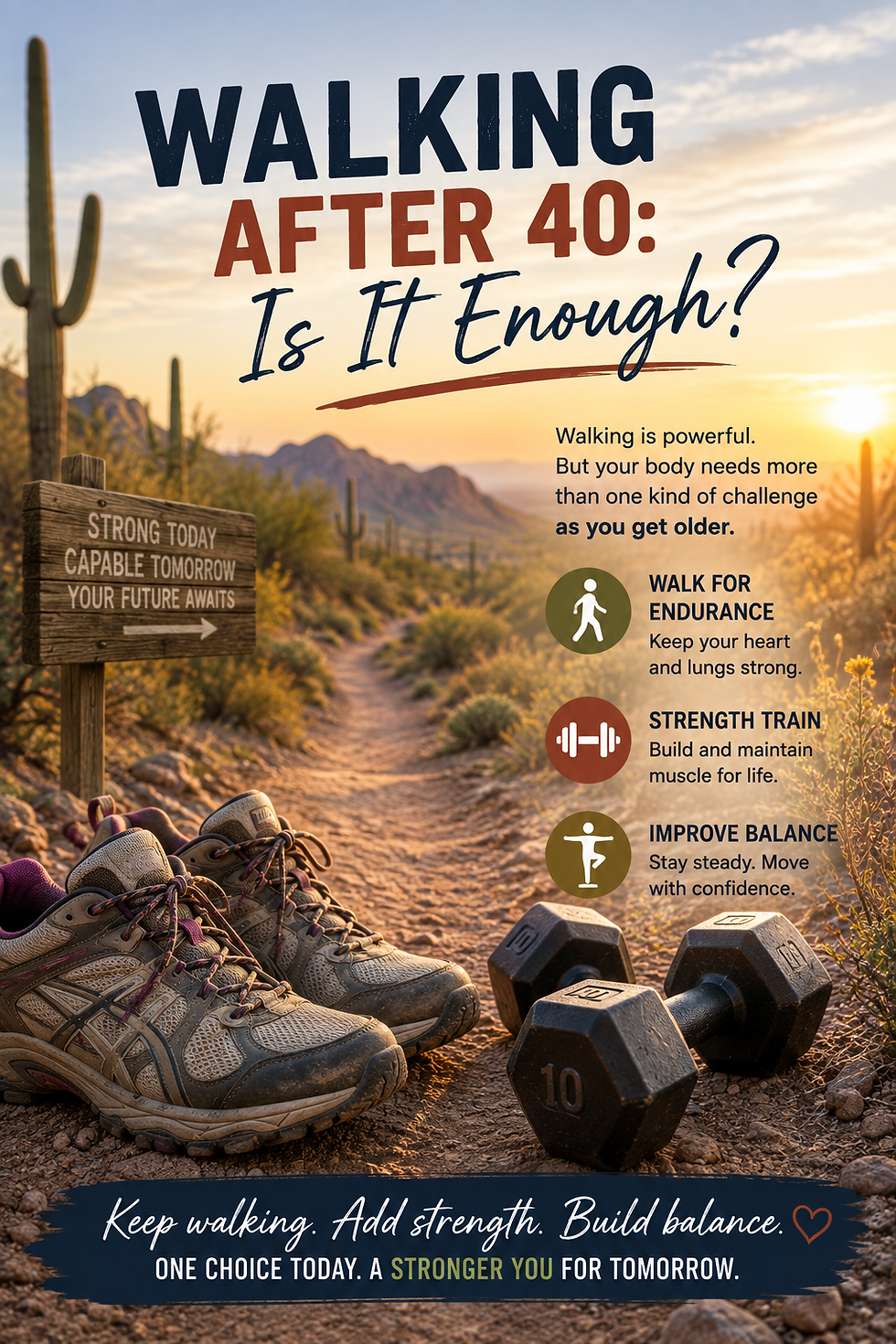
Movement can support sleep, health, strength and energy — but does your daily walk give your body everything it needs?
→ Read next: Walking After 40: Is It Enough?
About the Author
Megan Fain, PT is a physical therapist, health educator, and founder of Power Reset Path. With more than 15 years of experience in healthcare and additional training in functional nutrition, Megan focuses on helping women understand the many factors that influence how they feel and function during midlife.
Her approach combines evidence, movement, nutrition, recovery and practical health education to help women become curious about their bodies rather than immediately judging or dismissing what they’re experiencing.
She founded Power Reset Path on the belief that every woman, at every age, has an innate power to transform the world around her. Sometimes we just need help seeing it.
A Note From Power Reset Path
This article is for education and general wellness information and isn’t a substitute for individualized medical care.
Fatigue can have many causes, including conditions unrelated to perimenopause. Talk with your healthcare professional about fatigue that is persistent, severe, worsening, unexplained or interfering with your daily life, as well as concerning symptoms such as significant shortness of breath, fainting, chest pain or unusual bleeding.
References & Further Reading
National Institute on Aging (NIH)
Sleep Problems and Menopause: What Can I Do?
Information about sleep disruption during the menopause transition, night sweats, mood, sleep habits and treatment approaches.
National Institute on Aging (NIH)
What Is Menopause?
Information about the menopause transition, including sleep, mood, concentration and other symptoms women may experience.
American College of Obstetricians and Gynecologists (ACOG)
Sleep Health and Disorders
Information about insomnia, sleep apnea, restless legs syndrome, menopause-related sleep problems and daytime fatigue.
American College of Obstetricians and Gynecologists (ACOG)
The Menopause Years
Patient education about perimenopause, night sweats, sleep disruption and other symptoms of the menopause transition.
Office on Women’s Health, U.S. Department of Health and Human Services
Menopause Symptoms and Relief
Current information about sleep, daytime tiredness, mood, menstrual changes and treatment options during perimenopause and menopause.
The Menopause Society
Are You Just Tired or Are You Menopause Tired?
Discussion of fatigue during the menopause transition and emerging research examining the relationship between abnormal uterine bleeding and fatigue.


Comments