Protein After 40: Why It Matters and How to Get More Without Overcomplicating It
by Megan Fain, PT
Founder, Power Reset Path
Last reviewed: August 2026
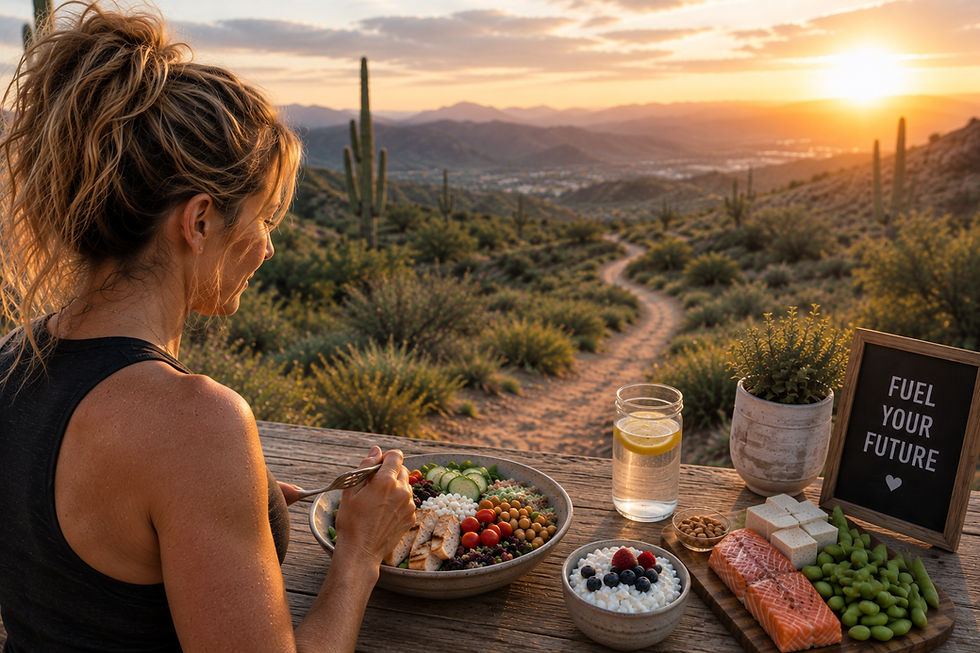
Protein suddenly seems to be everywhere.
Protein coffee.
Protein bars.
Protein cereal.
Protein everything.
So do women really need to care this much about protein as they get older?
Yes — protein deserves some attention.
But we don’t need to turn breakfast into a chemistry experiment.
First: Protein Isn’t Just for Bodybuilders
Protein provides amino acids your body uses to build and repair tissues and perform many essential functions.
And one of the tissues we should be paying particular attention to as we get older is muscle.
Muscle helps us:
Produce strength
Move and function independently
Perform everyday tasks
Support bone and metabolic health
Remain physically capable as we age
This is about much more than looking “toned.”
It’s about being able to live your life.
Muscle Becomes Increasingly Valuable With Age
Adults tend to lose muscle mass and strength as they get older.
For women, the menopause transition adds another reason to pay attention to muscle, bone health and physical activity.
But here’s the encouraging part:
Muscle responds to what we ask it to do.
Resistance exercise gives your muscles a reason to adapt.
Nutrition provides the building blocks needed to support that process.
That’s why I like to think about strength training + protein as a partnership.
Protein alone doesn’t build a strong body.
And training without adequate nutrition isn’t a great partnership either.
But How Much Protein Do I Actually Need?
This is where internet advice can get unnecessarily absolute.
There isn’t one perfect protein target for every woman over 40.
The Recommended Dietary Allowance, or RDA, for protein for healthy adults is 0.8 grams per kilogram of body weight per day.
But there’s an important detail:
The RDA is designed to meet the basic needs of nearly all healthy adults. It isn’t necessarily an individualized target for optimizing muscle, supporting a specific training program, or reaching a particular health or performance goal.
Research and expert guidance around healthy aging and exercise often consider higher protein intakes depending on factors such as age, activity, training, health status and goals.
That’s why I’d be cautious of anyone telling every woman on the internet:
“You need exactly ___ grams of protein.”
Your needs are individual.
Start With Your Plate Before Your Calculator
Before downloading another tracking app, look at what you’re already eating.
Start with breakfast.
Where’s your protein?
Then lunch.
Where’s your protein?
Then dinner.
Where’s your protein?
Many people consume much of their protein later in the day.
Rather than obsessing over one giant number, one practical first step is to intentionally include a protein-rich food at meals throughout your day.
That might look like:
Eggs.
Greek yogurt or cottage cheese.
Fish.
Chicken or other meats.
Milk or fortified soy milk.
Tofu.
Tempeh.
Edamame.
Beans.
Lentils.
Nuts and seeds can contribute too.
Protein powders can be convenient when they make sense for you, but they’re not mandatory.
Food doesn’t have to become complicated.
Plant-Based? You Can Absolutely Get Protein
You don’t have to eat meat to prioritize protein.
Soy foods, beans, lentils, peas, nuts, seeds and other plant foods can all contribute.
If you eat primarily or exclusively plant-based foods, variety and planning become particularly useful because different foods provide different amounts and combinations of amino acids and other nutrients.
You don’t need to create a perfect amino-acid combination at every meal.
Think about the overall quality and variety of your diet across the day.
More Isn’t Automatically Better
If some protein is good, more must be better, right?
Not necessarily.
Protein is one part of your overall nutrition.
You still need foods that provide fiber, carbohydrates, healthy fats, vitamins, minerals and all the other things that support health.
And certain medical conditions can affect how much protein is appropriate.
If you have kidney disease or another condition that affects your dietary needs, individualized recommendations from an appropriately qualified healthcare professional are important.
We’re not replacing one restrictive food rule with another.
We’re becoming more intentional.
Don’t Forget the Other Half of the Equation
Remember:
Protein gives your body building materials.
Resistance training gives your muscles a reason to use them.
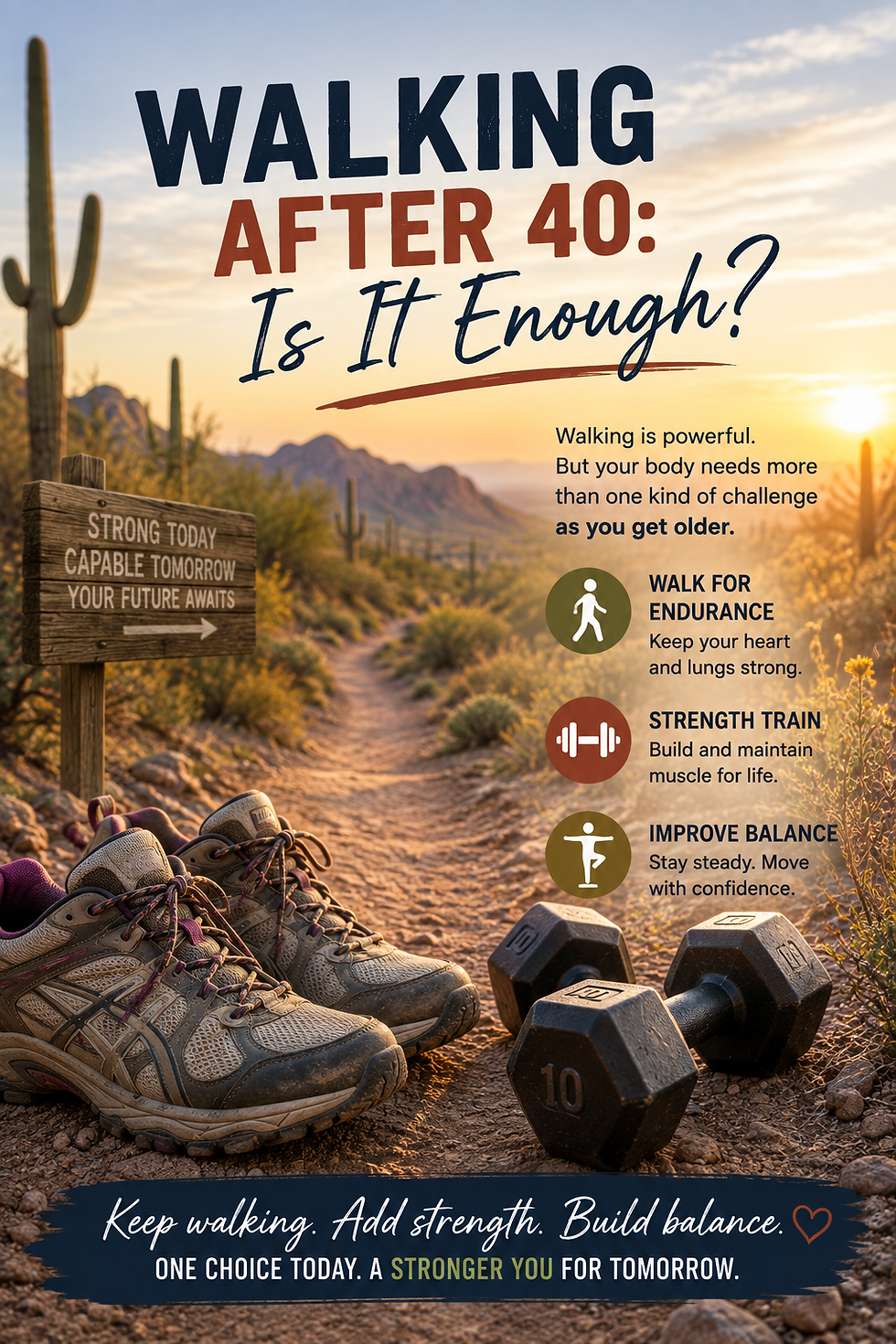
Adults should perform muscle-strengthening activities involving the major muscle groups at least two days per week, in addition to regular aerobic physical activity.
And strength training doesn’t have to mean becoming a powerlifter.
Weights.
Resistance bands.
Machines.
Body-weight exercises.
There are many ways to appropriately challenge muscle.
The best program is one that’s appropriate for you and that you can progressively continue.
Think Capability, Not Punishment
This is where I want to change the conversation.
For years, women have been taught to think about food and exercise primarily through one question:
Will this make me smaller?
I’d rather ask:
What will help me stay capable?
Capable of carrying groceries.
Getting off the floor.
Lifting a suitcase.
Hiking.
Gardening.
Traveling.
Playing with children or grandchildren.
Living independently.
Trying something you haven’t even decided to do yet.
Your body isn’t just something to look at.
It’s how you move through your life.
Start With One Meal
You don’t have to completely redesign your diet tomorrow.
Pick one meal.
Maybe it’s the breakfast that’s currently just coffee.
Maybe it’s the lunch you routinely skip.
Ask:
How could I add a meaningful source of protein here?
Then practice.
Learn what works for you.
Adjust.
And build from there.
Transformation rarely comes from knowing one more fact.
It comes from what we repeatedly do with what we know.
Your future deserves strength.
And the choices you make today help build it.
⸻
Ready for Your Next Step?
Protein provides the building blocks.
Now let’s give your muscles a reason to use them.
→ Coming next: Why Strength Training Matters More as We Get Older
About the Author
Megan Fain, PT is a physical therapist, health educator, and founder of Power Reset Path. With more than 15 years of experience in healthcare and additional training in functional nutrition, Megan helps women translate nutrition, movement and health information into practical choices they can use in everyday life.
Her background in physical therapy shapes her focus on strength, physical function and building bodies capable of supporting women through midlife and the decades ahead.
She founded Power Reset Path on the belief that every woman, at every age, has an innate power to transform the world around her. Sometimes we just need help seeing it.
A Note From Power Reset Path
This article is for education and general wellness information and isn’t a substitute for individualized medical or nutrition care. Protein needs can vary based on health, body size, activity, dietary pattern and individual goals. Talk with an appropriately qualified healthcare professional about recommendations specific to you, particularly if you have a medical condition that affects your nutritional needs.
References & Further Reading
National Academies / Dietary Reference Intakes
Dietary Reference Intakes for Energy, Carbohydrate, Fiber, Fat, Fatty Acids, Cholesterol, Protein and Amino Acids
Foundational reference for the adult protein Recommended Dietary Allowance of 0.8 g/kg/day.
National Institute on Aging (NIH)
What Do We Know About Healthy Aging?
Information about physical activity, nutrition and maintaining health and function as we age.
U.S. Department of Health and Human Services
Physical Activity Guidelines for Americans
Evidence-based recommendations for aerobic and muscle-strengthening activity for adults.
American College of Sports Medicine
Guidance and educational resources regarding resistance exercise, protein, physical activity and healthy aging.
The Menopause Society
Patient education and evidence-based information about healthy aging, nutrition, exercise and health during and after the menopause transition.


Comments